At All Property Claims, we understand the distress and disruption a fire can bring. Fires can occur for a variety of reasons, often catching homeowners off guard and leading to severe consequences. The aftermath of a house fire involves not only the physical destruction of your home and personal belongings but also emotional and financial stress. Navigating the complexities of fire damage insurance claims can be overwhelming, especially when you’re dealing with the immediate impacts of such a traumatic event.
Our goal is to help you understand the common causes of house fires so that you can take the necessary precautions and, should the worst happen, are well-equipped to file a successful fire damage insurance claim and get your property back to its original state. Here we delve into these causes, providing insights into how they typically start, the extent of damage they can cause, and the likelihood of your insurance claim being approved.
Common Causes of House Fires
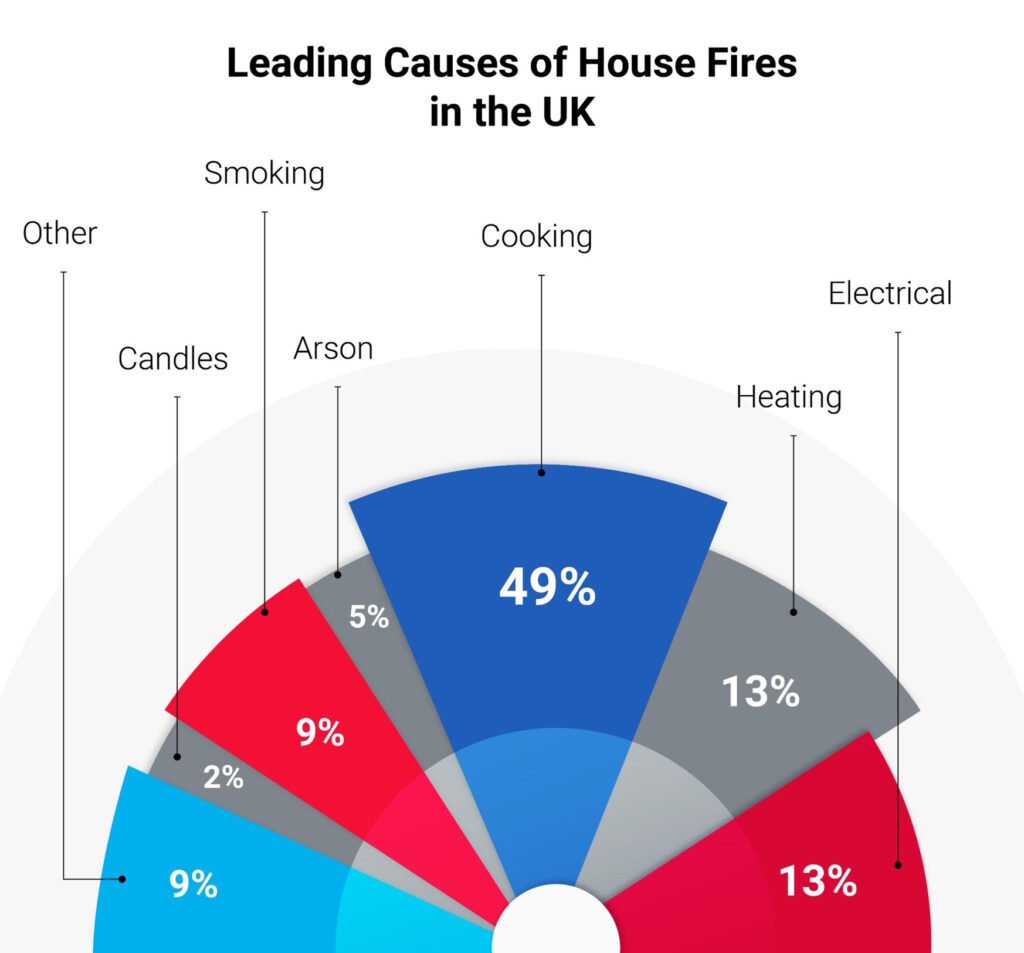
Understanding the common causes of house fires is crucial for both prevention and preparedness. Fires can start in a variety of ways, often when least expected, and can spread rapidly, causing extensive damage. Let’s explore some of the primary causes of house fires in the UK, shedding light on how they typically occur and the potential impact they can have on your home.
Electrical Fires
Electrical fires are one of the leading causes of house fires in the UK, often resulting from faults in the property’s wiring, overloaded sockets, or malfunctioning appliances. These fires can start without warning and spread quickly, causing extensive damage.
Faulty wiring is particularly hazardous as it is often hidden within walls, making it difficult to detect issues before it’s too late. Overloaded sockets can overheat and spark a fire, especially when multiple high-wattage devices are plugged in simultaneously. Malfunctioning appliances, such as old refrigerators, dishwashers, or washing machines, can also be significant fire hazards if they develop electrical faults.
Potential Damages
When an electrical fire occurs, it can be devastating because these fires often spread rapidly through hidden spaces in walls, floors, and ceilings, making them challenging to contain. The damage caused by electrical fires can range from localised burns and soot damage to complete destruction of property. Additionally, the smoke produced by burning electrical components can be toxic, posing severe health risks to occupants.
Cooking Accidents
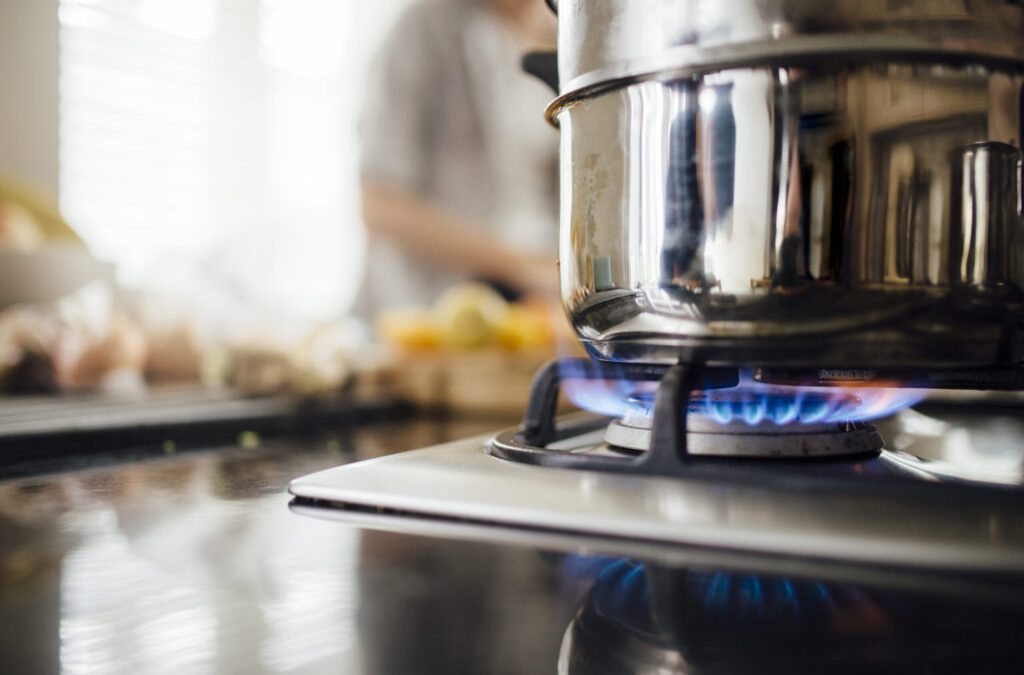
Cooking accidents are another common cause of house fires, often occurring when food is left unattended on the stove or when flammable materials are too close to the cooking area. Grease fires are particularly hazardous and can escalate very quickly.
Unattended cooking is one of the most significant risks, as distractions can lead to food burning and igniting, especially when using high heat. Flammable items like kitchen towels, paper towels, and curtains can easily catch fire if they are too close to the cooking area. Grease fires, which occur when cooking oils become too hot, are especially dangerous because they can spread rapidly and are not easily extinguished with water.
Potential Damages
The damage from cooking-related fires can be extensive, often confined to the kitchen but sometimes spreading to adjacent rooms. Fire damage can include burnt cabinets, countertops, and appliances, while smoke damage can permeate throughout the house, affecting walls, ceilings, and furniture. Additionally, the use of water or fire extinguishers can lead to further damage to kitchen surfaces and electrical equipment.
Heating Equipment
During colder months, heating equipment such as portable heaters, fireplaces, and wood-burning stoves are essential for warmth but can become fire hazards if not used correctly. These sources of heat can easily ignite nearby flammable materials. Portable heaters are particularly risky when placed too close to furniture, curtains, or bedding, as they can cause these items to overheat and catch fire. Fireplaces and wood-burning stoves can produce sparks that ignite nearby rugs or wood floors, and creosote build-up in chimneys can lead to dangerous chimney fires.
Potential Damages
Heating equipment fires can cause significant damage, particularly during the winter months when these devices are used more frequently. A fire originating from heating equipment can spread rapidly, especially if it starts in a living room or bedroom where there are many flammable items. The damage can include burned furniture, flooring, and structural components of the home, as well as smoke damage throughout the house. The high heat from these fires can also cause extensive warping and weakening of structural elements.
Smoking
Smoking indoors poses a significant fire risk, with cigarettes, cigars, and pipes being capable of igniting flammable materials if not properly extinguished. Many home fires have started from smouldering cigarette butts left unattended. Smoking in bed is particularly hazardous, as falling asleep with a lit cigarette can quickly ignite bedding and mattresses. Additionally, improperly extinguished cigarettes can smoulder for hours before igniting flammable materials, such as upholstered furniture or carpeting.
Potential Damages
Fires caused by smoking can result in severe damage, often starting in bedrooms or living areas where people smoke. These fires can spread quickly, fueled by flammable materials like furniture, curtains, and carpets. The damage can range from localised burns and smoke damage to complete destruction of the affected rooms. The toxic smoke produced by burning tobacco products can also cause significant health risks to occupants, further complicating recovery efforts.
Candles
Candles, while creating a cosy and inviting atmosphere, can be dangerous if left unattended or placed near flammable objects. Candle fires are often the result of negligence, such as forgetting to extinguish them before leaving a room or going to bed. Placing candles too close to flammable materials like curtains, bedding, and books can also lead to fires. Additionally, using unstable candle holders or placing candles on uneven surfaces can cause them to tip over and ignite nearby objects.
Potential Damages
Candle fires can cause significant damage, often starting in bedrooms, living rooms, or bathrooms where candles are commonly used. These fires can spread quickly, particularly if they ignite flammable materials like curtains, bedding, or furniture. The damage can include burns, soot, and smoke damage to walls, ceilings, and personal belongings. In severe cases, candle fires can cause extensive structural damage and require major repairs and renovations.
Arson
Arson, the intentional act of setting fire to property, is a severe and malicious cause of house fires in the UK. These acts can be perpetrated by vandals, disgruntled individuals, or even as part of insurance fraud schemes. Arson can occur for various reasons, including revenge, financial gain, or as an act of vandalism. These fires are particularly dangerous because they are often set in multiple locations or in a manner designed to cause maximum damage.
Potential Damages
Arson fires can result in catastrophic damage, often leading to complete destruction of the property. These fires are typically large and fast-spreading, fueled by accelerants like petrol or other flammable liquids. The aftermath of an arson fire can include extensive fire, smoke, and water damage, as well as structural instability. Additionally, the emotional and psychological impact of an arson fire on homeowners can be profound, adding to the complexity of recovery.
How All Property Claims Can Help
Experiencing fire damage to your property can be a difficult experience for countless reasons, and having to handle an insurance claim can feel overwhelming. Fortunately, the team here at All Property Claims is here to help manage your claim and any restoration work on your behalf.
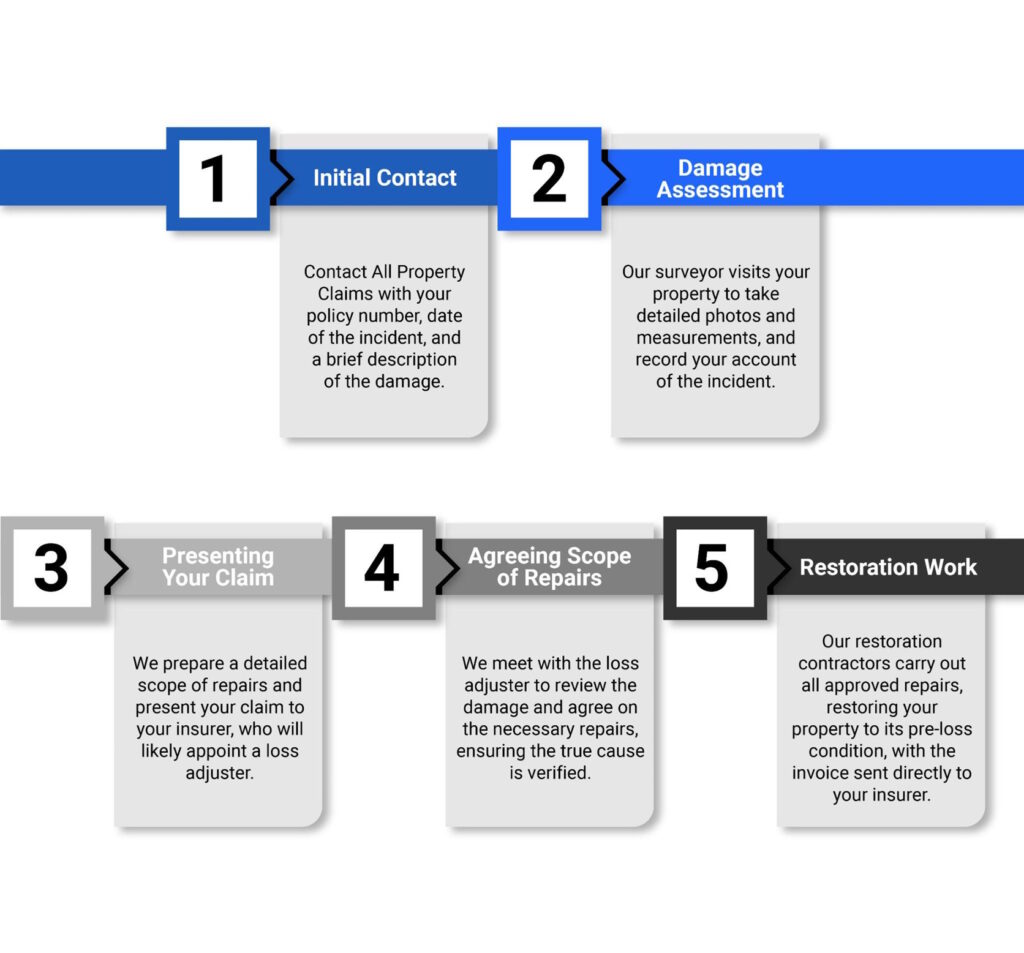
We aim to make the insurance claim process for fire damage as smooth and stress-free as possible. Here’s an overview of how we’ll handle your fire damage insurance claim from start to finish.
Initial Contact
Once you have documented the damage caused by the fire, contact us with your insurance policy number, the date of the incident, and a brief description of the damage. We will assign a surveyor to assess the damage and determine your coverage, ensuring a thorough review of your insurance policy from a legal perspective.
Assessing the Damage
If you instruct us to manage your claim, we will send our surveyor to your property to conduct a detailed assessment. This includes taking photos and measurements of each affected area and recording your account of the incident. We will then prepare a detailed scope of repairs to present to your insurer.
Presenting Your Claim
Upon receipt of the scope of repairs, the insurer will likely appoint a loss adjuster. We will meet the loss adjuster at your property to review the claim and agree on the necessary repairs, ensuring the true cause of the damage is verified.
Agreeing Scope of Repairs
We focus on agreeing the scope of work required to restore your property, such as drying and replastering walls or replacing floors. Once the scope of work is agreed upon, we present the repair costs to your insurer directly.
Claim Settlement and Restoration
After the claim settlement has been agreed upon by your insurer, our restoration contractors will carry out all the insurance-approved repairs, restoring your property to its pre-loss condition. All you’ll need to pay is the excess stated in your policy document.
Professional Support for Fire Damage Insurance Claims
At All Property Claims, we specialise in managing fire damage insurance claims with expertise and care. If you’ve experienced a house fire, contact us immediately for professional support and guidance through your fire damage insurance claim.